Meaning is Not an Add-On—It’s the Core Strategy.
Social and green entrepreneurship are no longer niche movements. In 2025, they have become the primary response to shrinking public services and a growing global demand for ethical business. But building a mission-driven venture is a practice of living with tension: how do you survive market pressures without losing the soul of your business?
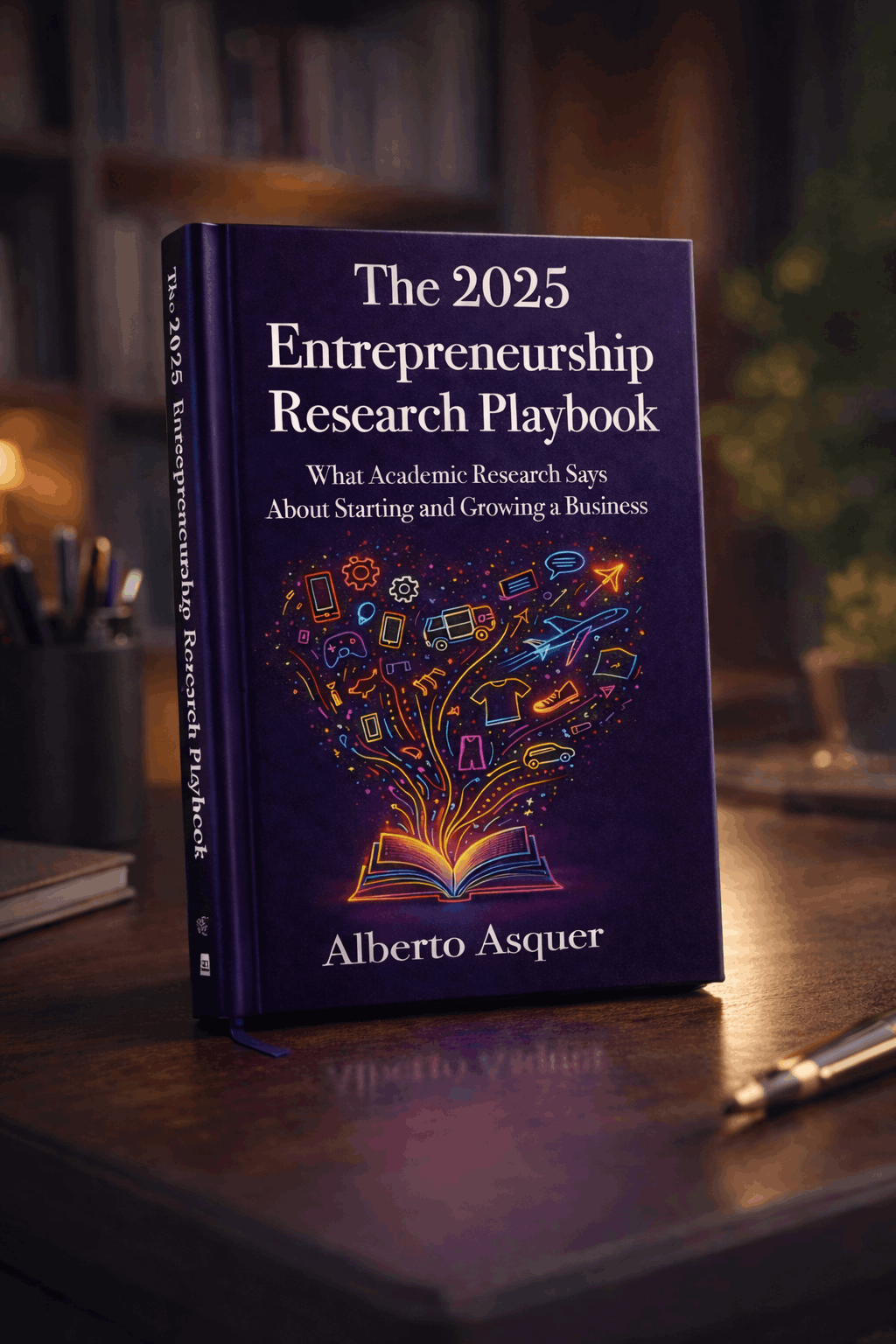
Chapter 5 of The 2025 Entrepreneurship Research Playbook provides a roadmap for founders to navigate the dual identity of economic value and social purpose.
Main Ideas: Navigating the Hybrid Paradox
Research for 2025 reveals that high-impact ventures succeed by designing for tension rather than trying to eliminate it:
* The Mission Drift Risk: Drift doesn't happen overnight; it occurs through gradual compromises. Strong governance and clear accountability are the only reliable "anchors" to keep your purpose intact under financial stress.
* Green Entrepreneurial Orientation (GEO): True sustainability isn't a branding exercise. It requires aligning your internal abilities with external opportunities—using explorative learning for radical innovation or exploitative learning for refining eco-processes.
* The Cost of "Honest Incompetence": Well-meaning founders can cause unintended harm if they lack local expertise or oversimplify complex social systems. Relational infrastructure and community engagement are critical safeguards.
* Knowledge Dualism: To succeed as a hybrid, you must master two types of knowledge: public knowledge (open science) to drive social impact and private knowledge (proprietary data) to secure competitive advantage.
Practical Applications for Entrepreneurs
1. Use Legitimacy as a Survival. Tool Don't rely on morality alone. In modern ecosystems, social enterprises must use strategic marketing and storytelling to prove their credibility to partners and investors who prioritize evidence over ideals.
2. Align Leadership with Innovation. Type If you want radical green innovation, you need a risk-seeking, learning-oriented leadership style. For steady, incremental improvements, a process-focused transformational style is more effective.
3. Leverage AI for "Mission Alignment". Generative AI can be a game-changer for resource-constrained founders. Use it to search for mission-aligned opportunities faster and to reduce the cognitive burden of navigating complex, information-poor environments.
4. Design Your Circular Model. Early Transitioning to a circular economy offers long-term gains but requires new routines and technology. Identify funding and intermediaries early, as capital remains the biggest bottleneck for circular business models.
Lead with Purpose, Scale with Evidence
Stop choosing between profit and impact. Learn how to build a venture that is financially viable, socially credible, and resilient enough to create impact that lasts