Why does so much business advice feel disconnected from the situations in which it is meant to be applied?
Founders, consultants, and senior executives in growing organisations are routinely exposed to a large volume of prescriptive guidance. Much of it circulates through bestselling books, professional networks, and social media, often framed around the experiences of highly visible “successful” entrepreneurs. These accounts tend to emphasise ideas such as rapid failure, constant pivoting, or extreme personal commitment, and they are frequently presented as broadly applicable lessons.
However, when organisational decisions must be made under conditions of constraint—limited cash flow, staff fatigue, governance pressures, or time-sensitive demands from investors—such advice often proves of little practical use. The difficulty does not lie in individual capability or effort, but in the nature of the knowledge being offered.
A substantial portion of mainstream entrepreneurship advice is affected by three well-documented limitations:
* Survivorship bias: Insights are drawn disproportionately from a small number of successful cases, while the much larger population of comparable ventures that did not succeed is rarely examined.
* Temporal mismatch: Many widely cited strategies reflect economic, technological, or institutional conditions that no longer hold.
* Narrative simplification: Complex organisational, psychological, and market dynamics are reduced to slogans that obscure rather than explain causal mechanisms.
As a result, entrepreneurs are often expected to manage highly complex organisations using guidance that was not designed for their actual operating conditions.
At the same time, a considerable body of relevant knowledge already exists. Researchers in entrepreneurship, organisation studies, and innovation are systematically examining issues such as founder decision-making under uncertainty, digital transformation risks, credibility and signalling in investor relations, and organisational responses to crisis. In 2025 alone, hundreds of peer-reviewed studies addressed these topics.
The challenge is not the absence of research, but its accessibility. Much of this work is published in specialist journals, behind paywalls, and written primarily for academic audiences. Its insights therefore remain largely unavailable to practitioners who could benefit from them.
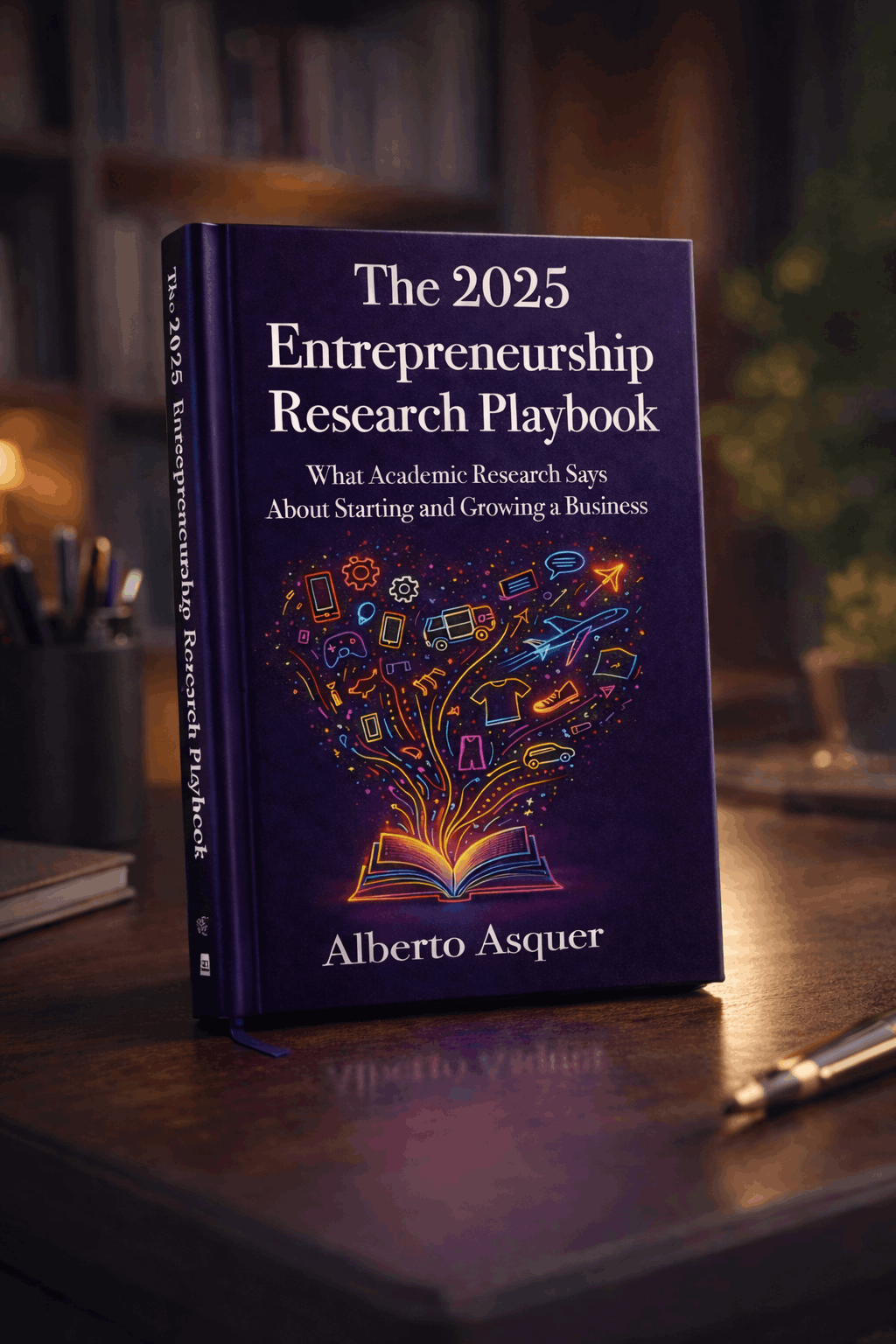
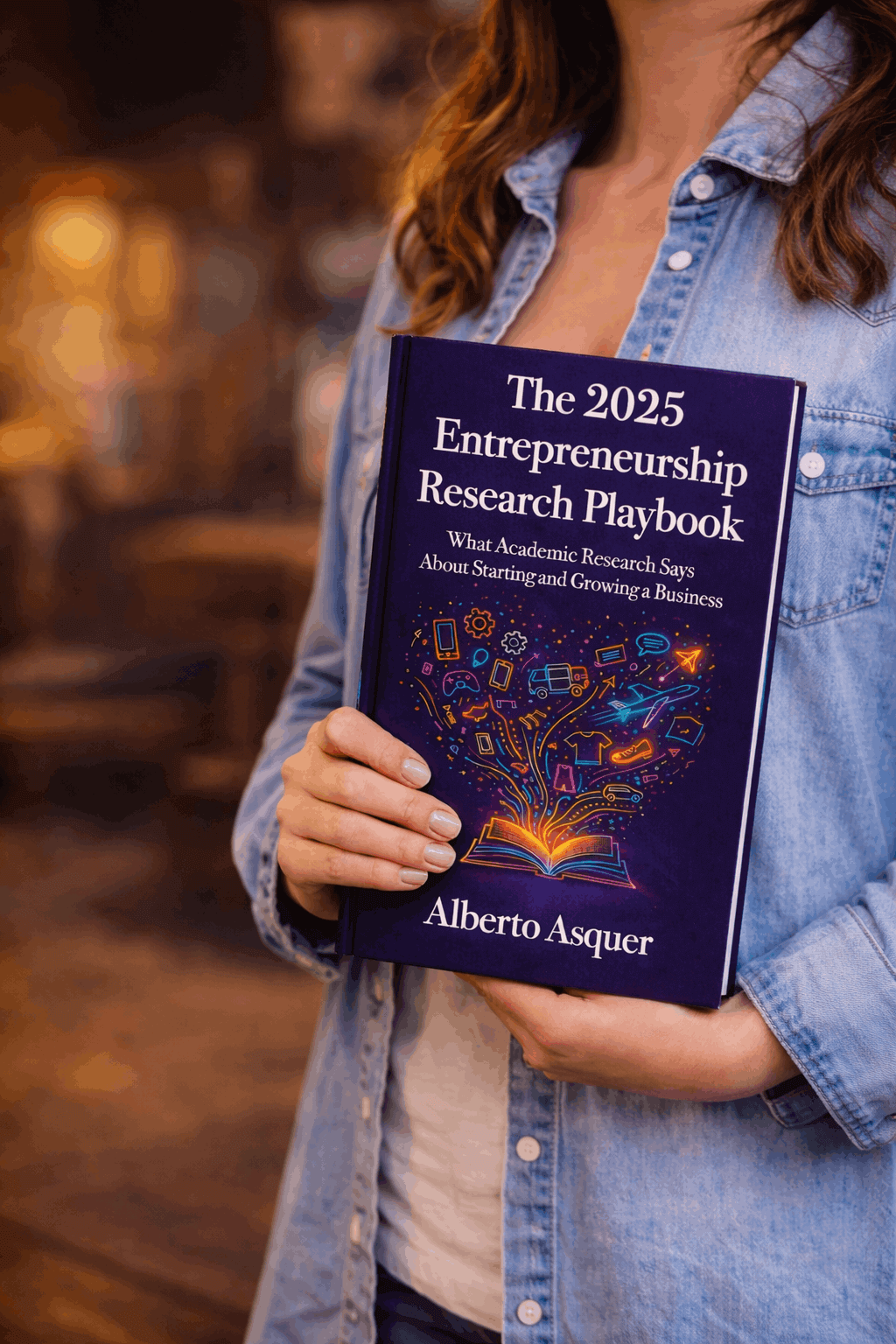
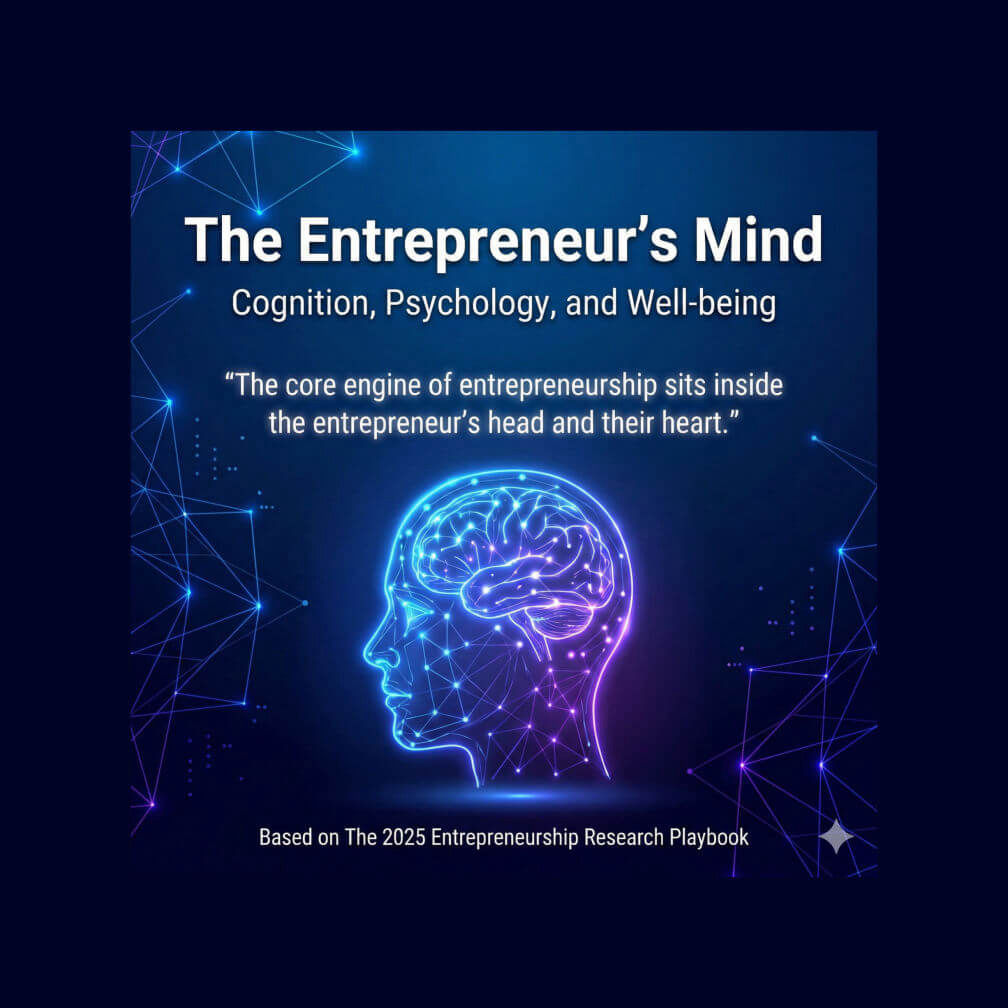
The 2025 Entrepreneurship Research Playbook is intended to address this gap. It synthesises and translates recent academic research into a form that is usable by founders, consultants, and managers. The aim is not to replace judgement or experience, but to make current, evidence-based knowledge on entrepreneurship available to those engaged in practice.